


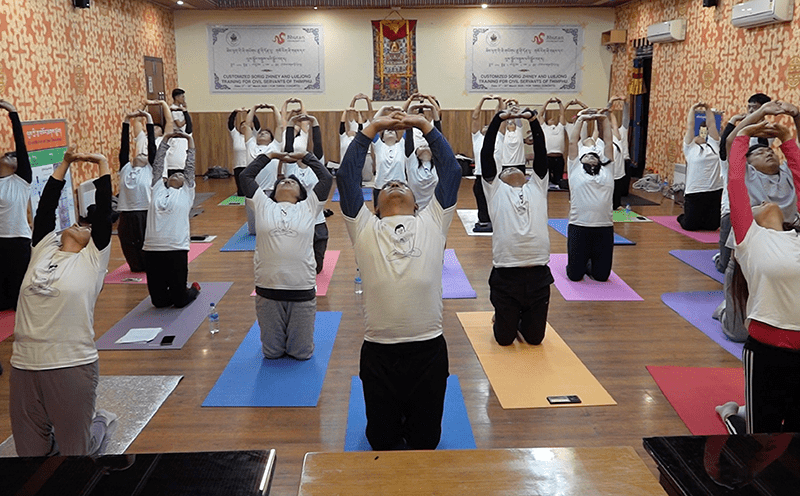
In a quiet training hall in the capital, the gentle hum of a singing bowl signalled the start of a different kind of government initiative—one that focuses not on policy or administration, but on the well-being of the people behind public service.
Civil servants from across the country gathered this week to take part in a four-day training programme on Sorig Zhiney and Luejong, traditional mindfulness and movement practices rooted in Bhutanese medicine. The second cohort concluded the programme today, while a third group is set to begin next week.
The initiative is part of a broader effort by the health ministry to address rising concerns around non-communicable diseases (NCDs) and mental health, while also enhancing workplace performance.
A Holistic Approach to Health
Unlike conventional fitness regimes, Sorig Zhiney (mindfulness meditation) and Luejong (therapeutic yoga) require no equipment and can be practised virtually anywhere—even within the confines of an office and in sessions as short as 15 minutes.
Participants begin by focusing on their breath, guided by soft, resonant tones. The practices aim to cultivate calmness, physical vitality, and mental clarity.
Health officials say such approaches are increasingly necessary. According to the Annual Health Survey 2023, Bhutan is facing a growing burden of lifestyle-related illnesses. Nearly 70 per cent of deaths in the country are attributed to NCDs, with around 40,000 people living with diabetes and more than 200,000 affected by hypertension. Mental health concerns are also rising, with approximately 28,000 cases reported.
“We are conducting these trainings primarily to prevent such diseases among civil servants,” said Kencho Wangdi, officiating head of the National Centre for Traditional Medicine Services under the Ministry of Health.
Beyond Physical Exercise
The programme has been adapted to suit individuals from all professional backgrounds, not just those in the medical field. Organised by the ministry’s Sorig Preventive Health and Wellbeing Division with support from the Bhutan Foundation, the training reflects a growing emphasis on preventive healthcare.
Trainers highlight that the benefits extend beyond physical fitness.
“Participants often report feeling lighter in their bodies and clearer in their minds by the end of the programme,” said Deki Choden, a Zhiney trainer at the National Traditional Medicine Hospital. “These practices are about cultivating inner peace, balance, and awareness.”
For many attendees, the experience has been eye-opening. Tenzin Dema, an attorney with the Office of the Attorney General, said the training reshaped her understanding of yoga.
“Earlier, I saw yoga mainly as physical exercise,” she said. “But this workshop helped me understand the importance of mindfulness—how breathing, awareness, and stillness are all interconnected. Viewing it through a Buddhist perspective made it even more meaningful.”
A Ripple Effect Across Workplaces
The training is being conducted in three cohorts, with participants expected to return to their respective offices and share what they have learned with colleagues. Officials hope this peer-to-peer approach will help embed wellness practices into daily work routines across government institutions.
Since its launch in 2016, the programme has reached over 1,000 individuals, including teachers, de-suups, and people in rehabilitation centres. Encouraged by positive feedback over the years, the ministry is now scaling up efforts to reach more civil servants.
As Bhutan continues to balance tradition with modern challenges, initiatives like these highlight the enduring relevance of its cultural heritage in addressing contemporary health concerns—one mindful breath at a time.


