


Across Bhutan’s mountains and valleys, colourful Lungta prayer flags flutter in the wind, carrying hopes, blessings, and spiritual aspirations. Yet when these sacred symbols fade and tear with time, few people stop to consider where they end up — or what they are made from. A new initiative by VAST Bhutan is now urging the public to reflect on both the cultural and environmental legacy of these widely used religious items.
The Lungta Art Festival, organised by the voluntary artists’ organisation, aims to draw attention to the life cycle of prayer flags and their growing environmental footprint. While Lungta flags are deeply rooted in tradition and are believed to spread positive energy through the wind, many discarded flags remain draped across hillsides and forests long after they have served their spiritual purpose.
According to organisers, the issue lies not only in disposal practices but also in the materials used to produce the flags. Many modern prayer flags are made from synthetic fibres such as polyester and nylon, which do not break down easily in nature. As they deteriorate, they can contribute to pollution in fragile ecosystems.
Karma Wangdi, founder of VAST Bhutan, said that buyers are often unaware of the environmental consequences. “People may not think about the materials when they purchase prayer flags, but the impact becomes clear when we see worn-out flags scattered across the landscape,” he said.
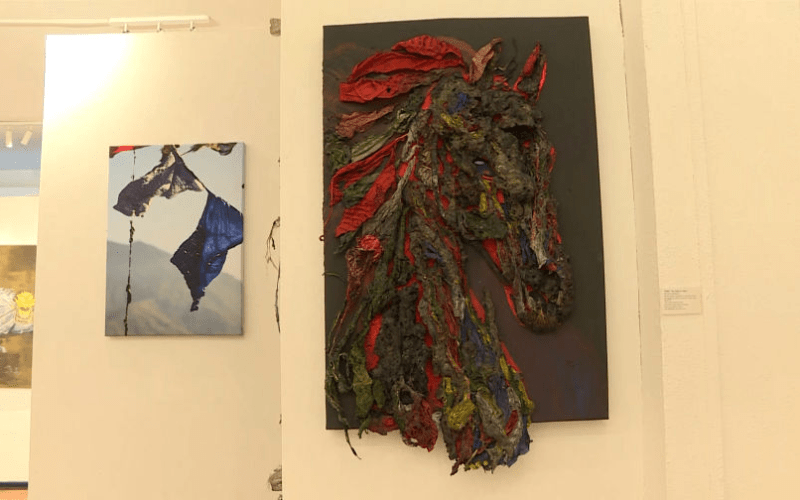
To encourage awareness and dialogue, the festival features more than 140 artworks created by around 60 artists. Through installations, visual pieces, and storytelling, participants explore the spiritual meaning of Lungta while questioning how traditional practices can adapt to modern environmental challenges.
The event is part of a broader, year-long programme that will include public discussions and workshops focused on designing biodegradable alternatives. Organisers hope to collaborate with communities, artisans, and environmental advocates to explore new ways of producing prayer flags that respect both faith and sustainability.
“We want people to think about how they hoist prayer flags and what happens afterward,” Wangdi said. “If we can shift towards environmentally friendly materials, we can preserve the tradition without harming nature.”
By blending art with cultural advocacy, the Lungta Art Festival seeks to inspire a balance between spiritual devotion and environmental responsibility. Organisers believe that thoughtful changes in how prayer flags are made and used can help ensure that a symbol of hope carried by the wind does not become a lasting burden on the land.


