


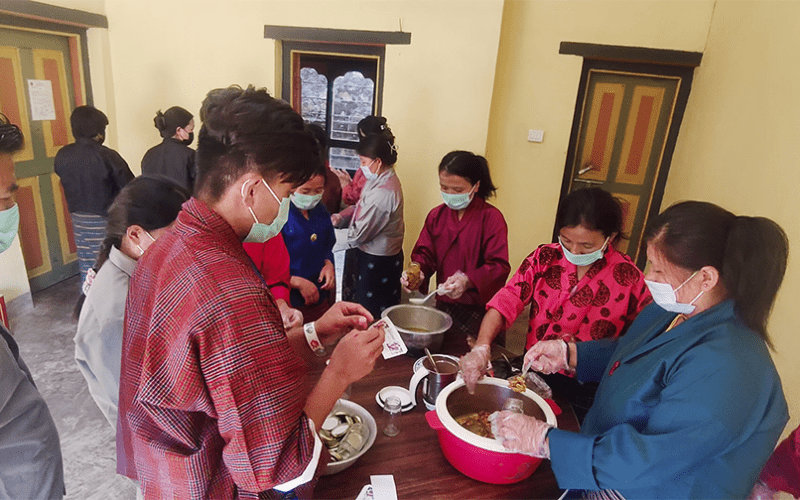
What was once left to rot in storage is now becoming a source of income for farmers in Wangphu Gewog, Samdrup Jongkhar. Thanks to a new training programme, local farmers are transforming their surplus garlic harvest into value-added products like pickles—reducing waste and boosting their earnings.
The two-day garlic pickling training, organised by the Samdrup Jongkhar District Administration with support from the Bhutan Foundation, taught 15 farmers how to produce six different types of garlic-based products.
For many participants, the initiative has opened new doors. “Before, many of our garlic bulbs would decay because we could not sell them on time. But after learning how to make pickles, I feel confident that I can earn more income,” said Sangay Lhaden, a farmer from Wangphu Gewog.
Another farmer, Pema Zangmo, shared how pickling offers a sustainable solution. “If we can’t sell garlic on time, it gets spoiled. But by making pickles, we can keep them for a much longer time.”
The economic potential is promising. “We usually sell a kilogram of garlic for Nu 100 to 150. But after making pickles, one kilogram produces three to four bottles, and each bottle sells for Nu 150. That means we can earn a profit of Nu 300 to 400,” explained Sonam Penjor, another farmer.
The Samjong Cooperative will help market these new products, ensuring that farmers can reach a wider customer base. With Wangphu Gewog producing over three tonnes of garlic annually—roughly the load of three Bolero trucks—the initiative could significantly reduce post-harvest losses and increase rural income.
For the farmers of Wangphu, a simple garlic bulb is no longer just a kitchen staple—it’s the foundation of a new source of livelihood.


