


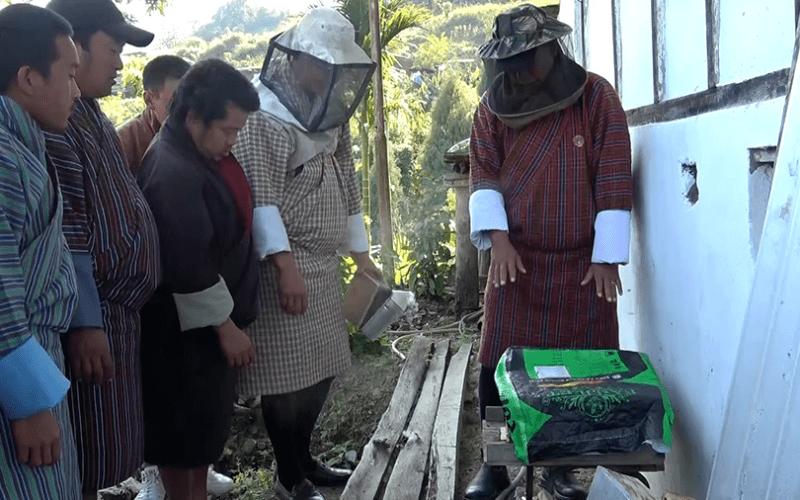
Mikuri Village in Dungmin Gewog, Pema Gatshel, is abuzz with fresh optimism as farmers explore a new way to strengthen both their livelihoods and the local environment. A week-long beekeeping training has introduced villagers to apiculture, opening doors to sustainable income generation rooted in nature.
Over seven days, a group of farmers came together with curiosity and determination, learning how the tiny honeybee can play a big role in farming success. The training focused on practical beekeeping skills, guiding participants through modern methods that allow honey production without harming bee colonies.
Farmers learned that bees are not just producers of honey but essential contributors to agriculture. By pollinating crops, bees improve fruit quality, increase yields, and support healthier vegetable growth. Many participants noted that this knowledge reshaped how they view farming as a whole.
For the ten farmers who took part, the training offered more than technical skills. It presented a livelihood option that blends economic opportunity with environmental stewardship. Participants expressed enthusiasm about earning income from honey while also supporting biodiversity and crop productivity.
The programme covered hive management, colony care, hygienic honey harvesting, and the importance of separating breeding areas from honey collection. Under the modern system, honey is harvested only from the upper box of the hive, ensuring cleanliness and allowing bees to continue thriving undisturbed.
Encouraged by what they learned, farmers say they are ready to begin beekeeping in their own backyards. With Dungmin’s favourable climate and increasing demand for organic products, apiculture is seen as a promising addition to traditional farming practices.
As the training concludes, its impact is expected to last well beyond the classroom. Soon, the soft hum of honeybees may become a familiar sound across Mikuri Village—signalling not only the production of honey, but a future built on resilience, sustainability, and renewed hope for local farming communities.


