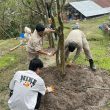



Bhutan is charting a new course in agricultural development with the emergence of large-scale “mega farms” designed not only to increase food production but also to serve as national training hubs for modern, market-oriented farming.
Backed by Project Tied Assistance (PTA) funding, the initiative reflects a growing recognition that agriculture must evolve to remain attractive, viable and competitive. The Ministry of Agriculture and Livestock is leading the effort, with implementation entrusted to the Department of Agriculture, and partnerships spanning youth institutions, law enforcement agencies and rehabilitation programmes.
At the heart of the plan are two Chirub farms being developed in collaboration with the Desuung office. These farms are envisioned as practical learning centres where young Bhutanese can gain hands-on experience in market-driven agriculture. Rather than focusing on subsistence practices, the training will emphasise high-demand crops, efficient production systems and commercial viability, preparing participants to enter agriculture as entrepreneurs rather than mere cultivators.
A parallel and equally significant initiative is taking shape at the Yarjugang Open-Air Prisoners (OAP) farm. Developed jointly by the Department of Agriculture, the Royal Bhutan Police and the PEMA Secretariat, the farm is redefining the role of incarceration. By engaging inmates in structured agricultural work, the programme seeks to transform confinement into rehabilitation, equipping prisoners with skills that can support reintegration into society upon release.
These farms are expected to function as national centres of excellence, offering exposure to modern farming technologies, including hi-tech cultivation methods and intensive management systems. A strong focus is being placed on import-substituting crops, aligning agricultural training with national food security priorities and reducing reliance on external markets.
To address one of the biggest challenges faced by farmers—market uncertainty—the initiative includes assured off-take arrangements. Institutions such as the Pemathang Gyalsung Academy and the Royal Bhutan Police will act as primary buyers, providing a stable and predictable market for farm produce. This guaranteed demand is expected to mitigate risks and encourage consistent production.
Sustainability has been built into the design of the programme. Strict monitoring mechanisms, coupled with advanced farming practices, aim to ensure long-term viability while maintaining quality standards. At the same time, policymakers are mindful of concerns that large farms could crowd out smallholder farmers. Strategies are being explored to ensure complementarity rather than competition, positioning mega farms as training and innovation hubs that ultimately strengthen, rather than undermine, the wider farming community.
By linking youth training, prison rehabilitation and food security under a single agricultural vision, Bhutan’s mega farm initiative represents an ambitious attempt to reimagine the role of agriculture in national development—one that creates livelihoods, builds skills and plants the seeds for a more resilient future.


