

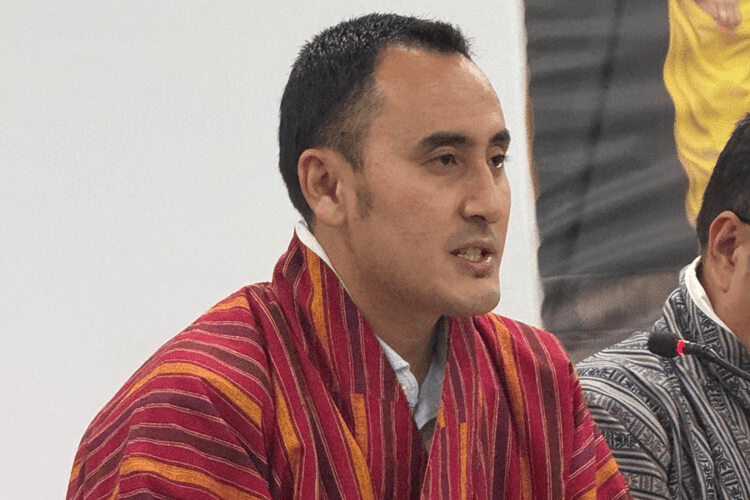
Bhutan’s Industry, Commerce and Employment Minister, Namgyal Dorji, has downplayed international attention on the kingdom’s placement among countries with the highest average working hours, insisting that domestic data shows compliance with accepted standards.
The International Labour Organization’s (ILO) 2024 report ranked Bhutan with an average workweek of 54.4 hours—one of the highest globally—and noted that 61 percent of Bhutanese workers log at least 49 hours per week. Such figures prompted media scrutiny, but Minister Dorji emphasized that those statistics draw from Bhutan’s 2022 Labour Force Survey, while comparator nations’ data span as far back as 2019.
“Most of our workforce averages 48 hours weekly,” Dorji clarified during a “Meet the Press” session today. “That aligns with both our Labour and Employment Act and the ILO’s own standards: 48 regular hours plus up to 12 hours of overtime, for a legal ceiling of 60 hours per week.”
The minister acknowledged a methodological inconsistency but stopped short of formally challenging the ILO. “We have not directly engaged with the ILO to contest their methodology,” he said, attributing the discrepancy to outdated survey cycles elsewhere and a communication gap that emerged after the pandemic.
Bhutan participates in the ILO as an observer, Dorji reminded reporters, and has yet to attain full membership. “Ordinarily, the ILO circulates questionnaires in advance of publishing such reports, and we respond,” he noted. “For the latest edition, however, no questionnaire reached us, leaving us unable to verify or clarify the figures beforehand.”
Despite the gap, the ministry is already reviewing national wage and hour standards. Dorji revealed plans to study trends in working hours and wages—and to consider raising the country’s minimum wage rate.
Labour advocates welcomed the scrutiny but urged transparency in the forthcoming review. “It’s vital that any revisions reflect both workers’ rights and economic realities,” said Tashi Choden, a representative of the Bhutan Trade Union Congress.
With Bhutan’s legal framework capping workweeks at 60 hours, the government now faces the task of ensuring its data collection keeps pace with international reporting—and that its labour policies continue to safeguard employee welfare.