


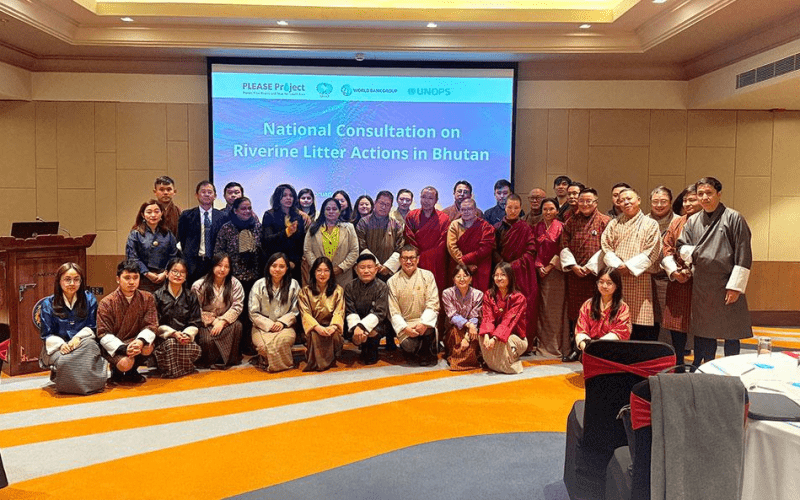
A national consultation held in Thimphu has drawn attention to the growing problem of plastic pollution in Bhutan’s rivers, identifying waterways as one of the main routes through which waste travels and spreads across ecosystems.
The consultation brought together policymakers, environmental experts and stakeholders to examine how waste generated on land eventually finds its way into rivers, posing risks to biodiversity, public health and downstream communities. Discussions underscored that rivers are not just victims of pollution but also active carriers, transporting plastic waste far beyond its point of origin.
Participants were presented with sobering figures on the country’s waste generation. Bhutan currently produces an estimated 241 metric tonnes of waste each day, a volume that continues to rise at an average annual rate of 6.6 percent. Rapid urbanization and changing consumption patterns were cited as key drivers behind this increase.
Plastic waste, alongside food waste, was identified as a major contributor to the growing waste stream. While policies and infrastructure exist, the consultation highlighted that gaps in everyday practices—particularly poor waste segregation at source—are undermining broader waste management efforts.
Several speakers emphasized that the challenge is not only technical but behavioral. Lapses in individual and community practices were seen as a critical weak point, calling for greater public awareness, consistent enforcement, and practical incentives to encourage responsible waste disposal.
Community engagement emerged as a central theme throughout the discussions. Participants stressed that lasting solutions will depend on active involvement from citizens, supported by clear guidance and benefits that make proper waste management both accessible and worthwhile.
Officials noted that efforts to address waste and river pollution are already underway, with coordination among multiple agencies to strengthen waste management systems. However, the consultation made clear that reversing the tide of plastic pollution will require sustained collaboration, stronger behavioral change, and a shared sense of responsibility to protect Bhutan’s rivers for future generations.


