


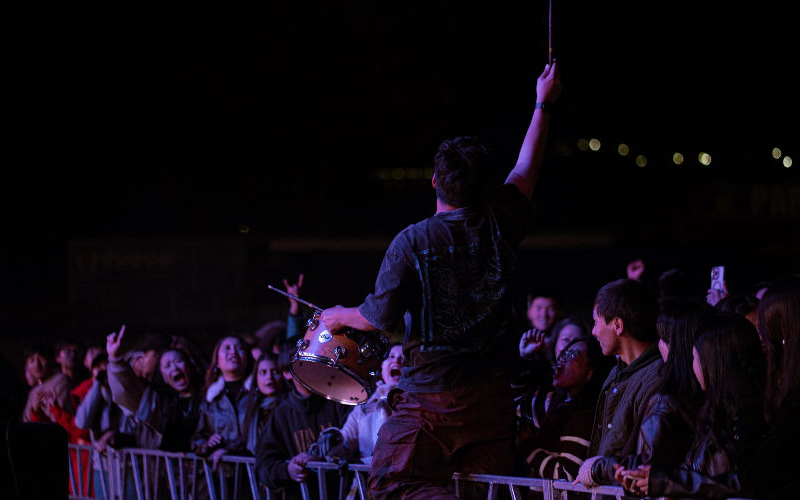
As dusk settled over Paro and prayer flags danced gently in the mountain wind, an unfamiliar energy rippled through the valley. Against the backdrop of ancient monasteries and the imposing dzong, electric guitars wailed, drums thundered, and voices soared — marking Bhutan’s first-ever rock festival and a striking departure from the town’s famously tranquil rhythm of life.
Paro, long celebrated for its sacred sites and cultural heritage, became the unlikely stage for a two-day explosion of sound as rock music replaced the usual quiet hum of evening prayers. On the opening night, six bands performed to a growing crowd, with another six scheduled to take the stage on the final day.
The festival brought together Bhutanese musicians and rock artists from across Asia, including India, Japan, South Korea, and Thailand. The result was a rare fusion of tradition and modern expression, where centuries-old landscapes framed contemporary music and youthful energy.
For local musicians, the event represented far more than entertainment. It was a milestone for Bhutan’s evolving music scene. Many performers described the experience as both thrilling and challenging, as they shared professional stages and advanced sound systems with seasoned international artists.
Local bands approached their performances with a mix of excitement and nerves, aware that they were part of a moment that could redefine perceptions of rock music in Bhutan. Musicians spoke of the opportunity to learn about stagecraft, lighting, and sound management — and to challenge the idea that rock music is defined only by volume rather than melody and emotion.
International performers, in turn, expressed admiration for Bhutan’s emerging talent. Several noted similarities between Bhutan and their own countries, where rock remains a niche genre compared to more mainstream pop music. These shared experiences helped turn the festival into a cultural exchange, driven not by speeches or ceremonies, but by rhythm and sound.
Artists from abroad highlighted Bhutan’s distinctive musical identity, pointing to its storytelling traditions and cultural depth as fertile ground for a uniquely Bhutanese rock sound. Some were struck by the melodic structures and guitar work of local bands, describing them as refreshingly different and deeply rooted in tradition despite the modern genre.
Organisers said the festival was also part of a broader effort to bring creative events beyond the capital. While Thimphu often hosts major cultural and entertainment programmes, Paro was deliberately chosen to decentralise such initiatives and make live music more accessible nationwide. The Woochu sports arena, with its capacity to host large crowds, proved an ideal venue for the occasion.
As night fell, the audience continued to swell. Young fans, seasoned rock listeners, curious residents, and international visitors filled the venue, many attending their first-ever rock concert in Paro. For some, the evening was about learning and inspiration; for others, it was about witnessing history unfold.
When the first chords echoed across the valley, cheers rose into the cool mountain air. Heads bobbed, phones lit up the crowd, and Paro — if only for a few hours — surrendered to the raw pulse of rock music.
By the end of the night, the festival felt larger than a musical event. It signalled a shift, a moment when old landscapes embraced new sounds. Paro did not simply host a concert; it marked the beginning of a new chapter in Bhutan’s cultural story.


