


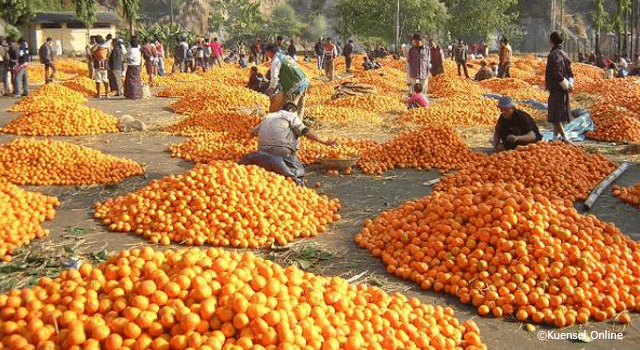
For generations, the vibrant orange hue of the mandarin has been the color of prosperity in Bhutan’s lower valleys. But as the climate shifts, that “gold” is migrating. In a dramatic reshaping of the nation’s agricultural map, rising temperatures are forcing mandarin cultivation out of its traditional heartlands and into the cooler, higher altitudes of the Himalayas.
A Tale of Two Elevations
The shift has created a starkly divided reality for Bhutanese farmers. In the lower-lying regions, once the powerhouse of citrus production, the industry is in a state of collapse. Farmers here are battling an onslaught of heat-stressed trees and a surge in pests.
“Production is decreasing by nearly 50% in some areas,” notes Abid Hussain, a senior economist, citing the devastating impact of citrus greening disease and premature fruit drop. The struggle has become so severe that many families are abandoning their ancestral groves entirely, attempting to pivot to tropical fruits like mangoes and litchis—only to find these new crops bring their own set of unfamiliar pest challenges.
In contrast, the story at higher elevations is one of unexpected windfall. Temperatures that were once too frigid for citrus are now hitting the “sweet spot,” leading to bumper harvests and significant income growth for highland communities.
The migration is backed by sobering data. The National Center for Hydrology and Meteorology (NCHM) projects that temperatures in the region will rise by 1°C to 3°C by the end of the century. For the sensitive mandarin tree, this shift isn’t just a matter of weather; it’s a matter of survival.
Government and Expert Response
The Ministry of Agriculture and Livestock (MoAL) is now racing to catch up with the changing climate. Current initiatives include:
- Research & Mapping: Identifying new, viable growing zones at mid-to-high altitudes.
- Climate Insurance: Developing safety nets for farmers in failing regions.
- Biosecurity: Investing in disease-free planting materials to prevent the spread of citrus greening.
Experts warn that simply moving uphill isn’t a permanent solution. They emphasize the need for diversification and resilient farming practices to avoid creating new ecological vulnerabilities. Strengthening biosecurity and finding mid-altitude varieties that can withstand erratic weather patterns are seen as the only ways to preserve Bhutan’s citrus legacy.
As the “mandarin line” continues to climb, the challenge for Bhutan will be ensuring that the farmers left behind in the valleys aren’t forgotten in the heat of the change.


