


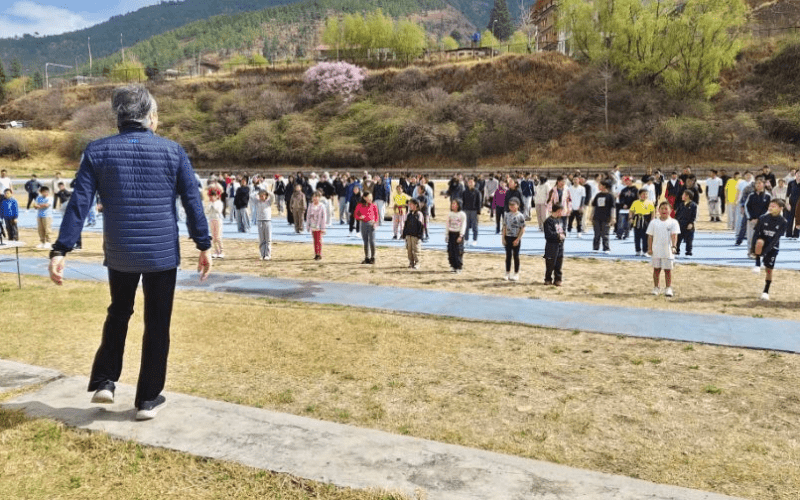
The Bhutan Amateur Athletics Ground came alive with energy and enthusiasm this morning as hundreds of young people and sports instructors gathered for a vibrant gymnastics session aimed at promoting health, enjoyment, and community engagement.
The event introduced participants to “Gymnastics for All,” a global initiative that focuses on inclusive, non-competitive physical activity. Led by visiting Japanese expert Professor Araki Tatsuo, the session emphasized simple exercises designed to improve flexibility, coordination, and overall well-being.
From laughter-filled stretches to lively jumps, the atmosphere reflected both excitement and curiosity—especially among first-time participants. For many young attendees, the session marked their first encounter with gymnastics, turning the morning into a blend of discovery and recreation.
Ten-year-old Nima Ghalley, a Class Four student from Changzamtog Middle Secondary School, was among those who eagerly joined in. “I like sports, and I want to win trophies and make my family proud,” she said. “The jumping part was very fun, and meeting my friends during the session made it even more enjoyable.”
The one-hour programme brought together around 300 participants, including students and 15 School Sports Instructors from across the country. Many highlighted the immediate physical benefits of the exercises. “It was very good for my health,” said participant Dinesh Gurung. “My body warmed up and became more flexible. Programmes like this are important because they help keep our bodies healthy.”
Unlike competitive gymnastics often associated with high-level sporting events, “Gymnastics for All” removes the pressure of medals and rankings. Instead, it promotes physical and mental wellness through accessible and enjoyable activities for people of all ages.
Professor Araki explained that the programme aims to address a common challenge. “Many people want to stay healthy and need exercise, but they often do not know which type of exercise is best for them,” he said. “Gymnastics has a long history as a basic form of exercise, and this programme helps people find simple routines that support their health.”
Organizers believe the initiative could have a lasting impact beyond the day’s session. Plans are already underway to expand gymnastics activities across schools, with instructors receiving training to integrate the exercises into their regular programmes.
Jigme Namgyel, an instructor from Buli Central School in Zhemgang, expressed his intention to carry the momentum forward. “Students often get bored with the same routine of school,” he said. “I plan to organise gymnastics sessions on Saturdays and raise awareness among the community and teachers, especially during events like World Health Day.”
There are also broader ambitions for the sport in Bhutan. Officials are exploring the establishment of a national gymnastics body, which could eventually enable the country to join international organizations such as the International Gymnastics Federation and the Asian Gymnastics Union.
Professor Araki further hopes to extend the programme to monastic institutions, allowing monks to benefit from regular physical activity alongside their spiritual practices.
As the session concluded, the smiles and renewed energy among participants suggested that “Gymnastics for All” may well become a cornerstone of Bhutan’s growing focus on health, inclusivity, and active living.


