


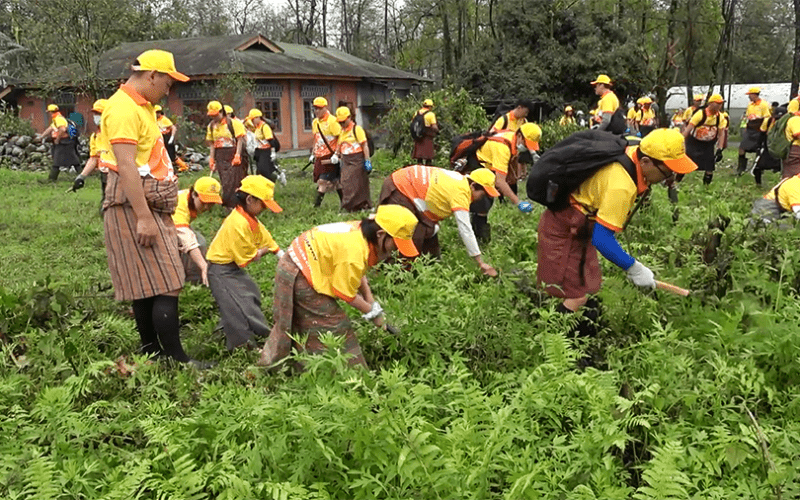
As the latest phase of a nationwide volunteer initiative drew to a close today, its impact extended far beyond the acres of land restored. What unfolded over weeks of work became a powerful narrative of unity, homecoming, and shared purpose among Bhutanese communities across the globe.
Thousands of volunteers, spread across multiple worksites, wrapped up an intensive period of habitat restoration, land clearance, and plantation activities. Once-degraded stretches of land now stand renewed, offering fresh ecological promise. Yet, it was not just the visible transformation of the landscape that defined the effort, but the people behind it.
This phase saw a remarkable turnout of Bhutanese living abroad, many of whom travelled from countries such as Australia, Qatar, and India to take part. For many, the journey was about more than volunteering—it was a return to roots.
Sonam Jamtsho, who travelled from Australia with his family, described the experience as deeply meaningful. Living overseas had limited opportunities to contribute back home, he said, but a message of unity from the King inspired them to take part in the Gelephu Mindfulness City project.
For parents like Tenzin Wangchuk, also based in Australia, the effort carried an added dimension. Bringing his child along, he explained, was a way of teaching responsibility and helping the next generation understand their connection to the country. Across worksites, similar scenes unfolded as children joined elders in planting saplings and clearing land—learning through participation rather than instruction.
Young volunteers echoed a simple but strong sense of purpose. Some said they had come to help their country, while others spoke of contributing to what they see as an important national project for the future.
The spirit of commitment was equally evident among those travelling from regions facing uncertainty. Namgay Wangmo, who returned from Qatar, said she felt compelled to contribute despite ongoing tensions where she lives. Having missed earlier phases, she described this participation as both fulfilling and necessary.
In total, the initiative drew thousands of participants who worked across extensive areas, focusing on plantation drives, habitat enrichment, and site preparation. The final push was further strengthened by devotees who, after completing prayer ceremonies just a day earlier, joined the volunteer workforce—bringing both additional hands and a renewed sense of purpose.
Beyond the physical work, the atmosphere throughout this phase reflected a blend of effort and community. Evenings offered volunteers a chance to unwind, with members of the Film Association of Bhutan organising entertainment programmes at Gelephu Thubten Choekhorthang. The gatherings created space for connection and reflection after long days in the field.
The sixth round of the initiative concluded with a Tokha granted by Jigme Khesar Namgyel Wangchuck, bringing volunteers together in a moment of shared gratitude and recognition.
As the worksites quiet down, the legacy of this phase remains vivid—not just in the rejuvenated land, but in the stories carried home by those who took part. Families reunited through service, children introduced to hands-on responsibility, and a collective effort that transcended borders have all contributed to shaping what many are calling a truly global Bhutanese endeavour.


