


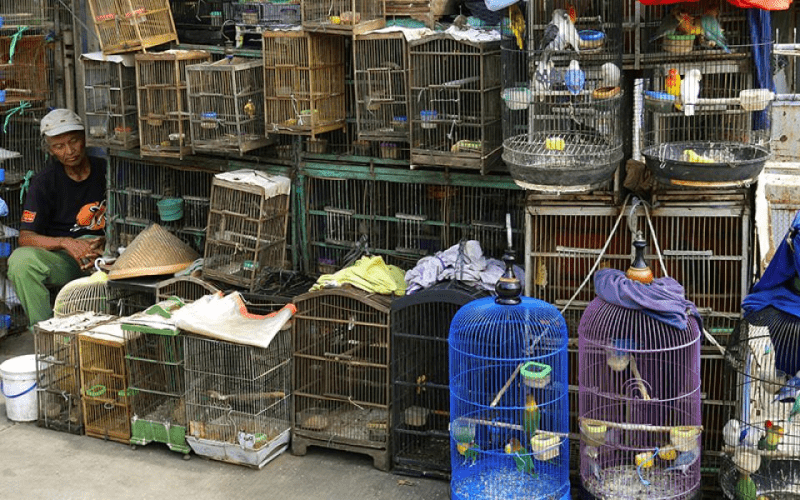
The illegal trade in wildlife is no longer limited to remote forests, hidden markets, or cross-border smuggling routes. Increasingly, traffickers are turning to the internet, using social media and online marketplaces to advertise and sell wildlife products. This shift is creating new enforcement challenges, particularly for countries such as Bhutan, renowned for its rich biodiversity.
Authorities say digital platforms are becoming convenient tools for individuals seeking to trade wildlife products while remaining largely anonymous. In Bhutan, officials have already noticed instances where wildlife items are being promoted through social media posts, reaching potential buyers far beyond local communities.
The products offered online range widely, from deer antlers and snake skins to carved ivory cups. While Facebook is believed to be the most frequently used platform for such activity, officials note that no formal cases have yet been reported. One reason is the lack of systems capable of effectively tracing online sellers.
Kinga Norbu, Deputy Chief Forestry Officer with the Forest Surveillance and Enforcement Division of the Department of Forests and Park Services, said the growing use of digital tools has transformed how wildlife trafficking operates.
“As long as a person has a mobile phone, it becomes both a buyer and seller platform,” Norbu said. “With cybercrime, the sophistication has increased compared to a few years ago, so departments must strengthen their investigative skills to deal with these new challenges.”
The shift to online marketplaces reflects a global trend. Illegal wildlife trafficking is now considered one of the most lucrative environmental crimes, with the global market estimated to be worth around USD 40 billion.
Efforts are being made internationally to curb the problem. According to the Coalition to End Wildlife Trafficking Online, companies involved in the initiative removed or blocked more than 24 million illegal wildlife listings and suspected sellers between 2018 and 2024.
However, the nature of online wildlife trade differs from traditional trafficking networks.
M. Maranko, former Assistant Director of India’s Wildlife Crime Control Bureau, said large mammals such as big cats and primates are rarely sold online. Instead, most social media activity involves smaller species.
“Most activity on social media involves smaller animals such as tortoises, turtles and live birds,” Maranko said. “For Himalayan species, we still do not have much data.”
In Bhutan, officials warn that wildlife cybercrime is evolving quickly, making investigations more complicated. Without a dedicated tracking system, it is difficult for authorities to trace online wildlife products back to their origin or identify those responsible for selling them.
“It has created widespread accessibility to both buyers and sellers,” Norbu said. “At the moment, the department does not have the capacity to conduct cyber patrols or cyber investigations. But we are now looking at building that capacity to fight cybercrime.”
Bhutan’s legal framework, however, leaves little ambiguity. Under the Forest and Nature Conservation Act 2023, the sale or trade of protected wildlife is a criminal offence. Individuals are not permitted to possess wildlife specimens listed under Schedule I unless they hold a certificate issued by the Department of Forests and Park Services.
Violations of the law can result in significant fines and imprisonment.
Yet experts warn that as wildlife traffickers continue shifting their operations into the digital world, traditional enforcement methods may no longer be sufficient.
Strengthening cyber investigation capabilities, developing better digital monitoring systems, and improving international cooperation are likely to play an increasingly important role in addressing the problem.
For Bhutan, protecting its wildlife may now depend not only on safeguarding forests and habitats, but also on staying ahead of threats that are increasingly hidden behind screens.


