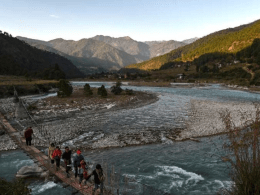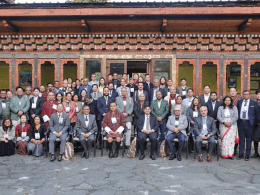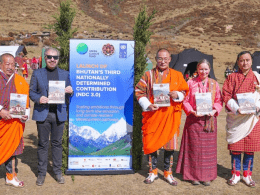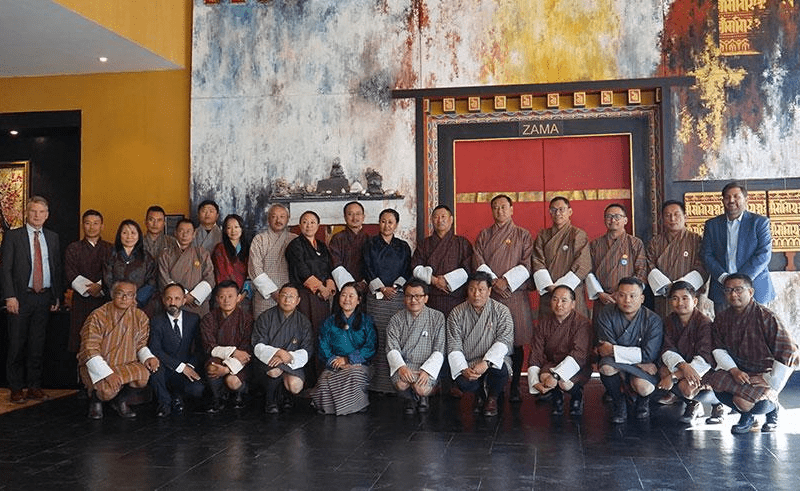
Bhutan and the International Centre for Integrated Mountain Development (ICIMOD) have reaffirmed their joint commitment to safeguarding fragile Himalayan ecosystems and strengthening the resilience of communities that depend on them. The second session of the Bhutan–ICIMOD Coordination Committee (BICC), held recently in Thimphu, marked a pivotal moment in shaping the next phase of cooperation aimed at climate adaptation, disaster preparedness, and sustainable livelihoods.
Progress Under MTAP-V
The current Medium-Term Action Plan, MTAP-V (2023–2026), has already delivered notable benefits to Bhutan’s mountain communities. Ongoing initiatives have enhanced rangeland management and agricultural productivity while helping secure water resources in climate-vulnerable highland regions. Tourism development, improved energy solutions, and strengthened air-quality monitoring systems have further contributed to Bhutan’s environmental stewardship goals.
Community-based flood early warning systems—an essential line of defence as glacial melt accelerates—have been widely recognized as a standout achievement. These interventions not only protect lives and infrastructure but also offer vital data for climate-related decision-making.
Areas Needing Greater Focus
Despite promising progress, delegates acknowledged gaps that must be addressed to ensure long-term success. Private-sector engagement remains limited, raising concerns about sustained financing and innovation. Participants also highlighted the need to more fully integrate digital decision-support tools to help policymakers prepare for high-impact climate events and monitor environmental health.
Looking Ahead: MTAP-VI Sets Higher Ambitions
The forthcoming Medium-Term Action Plan, MTAP-VI (2027–2030), broadens both scope and urgency. It strengthens priorities in cryosphere research, disaster risk reduction, air-quality improvement, ecosystem restoration, and livelihood advancement.
A defining addition to the new plan is earthquake preparedness, a response to Bhutan’s location in one of the world’s most seismically active regions. Phuntsho Namgyal, Director General of the Department of Geology and Mines, will lead this effort, underscoring the country’s resolve to incorporate multi-hazard planning into national risk-management frameworks.
Final Consultation Ahead
Before MTAP-VI is presented to ICIMOD’s governing body, a national-level consultation will be held to confirm priorities and finalize pathways for implementation. Officials emphasized that the partnership’s future lies in deeper cooperation, science-driven solutions, and stronger financial and institutional backing.
As melting glaciers, erratic monsoons, and seismic risks continue to challenge the Himalayas, Bhutan’s collaboration with ICIMOD signals a clear message: protecting mountain landscapes and the communities that rely on them is not merely an environmental responsibility, but a regional imperative.