


Bhutan’s hydropower sector is quietly undergoing a significant transformation. Once heavily dependent on foreign contractors and technical expertise, the country is now steadily building its own capacity, with Bhutanese engineers and contractors taking the lead in major energy projects.
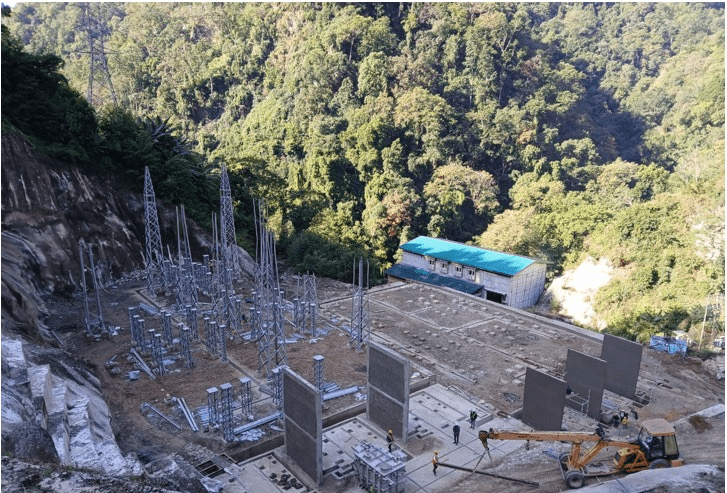
Two ongoing hydropower developments—the 54 megawatt Burgangchu project and the 32 megawatt Yungichhu project—illustrate this shift. Both projects are being implemented under the management of the Druk Green Power Corporation (DGPC) and are scheduled for completion in early 2026. Yungichhu is expected to be commissioned by February, followed by Burgangchu in March.
According to DGPC Managing Director Dasho Chhewang Rinzin, these projects represent more than just additions to the national power grid. They are practical training grounds for Bhutanese professionals, strengthening local technical expertise and reducing long-term reliance on foreign firms. “The experience gained from these projects is critical,” he has said, noting that it is this growing confidence and competence that will enable Bhutan to take on larger ventures, such as the planned 90 megawatt Jomori project.
Both Burgangchu and Yungichhu are being developed with modern supervisory control and data acquisition (SCADA) systems, allowing for automated operations and the possibility of remote monitoring and control. This technological upgrade is expected to improve efficiency, enhance safety, and reduce operational costs over time.
Despite facing delays caused by logistical challenges, difficult terrain, and other project-related hurdles, the two hydropower plants are expected to play an important role in stabilizing local power supply. Once operational, they will not only meet regional demand but also generate surplus electricity for export, reinforcing hydropower’s role as a cornerstone of Bhutan’s economy.
The benefits of these projects extend beyond electricity generation. Construction activities have boosted local economies, creating employment opportunities and improving infrastructure such as access roads and basic services in the project areas. For many communities, the projects have brought lasting improvements that will remain long after construction is complete.
In terms of output, the Burgangchu project is expected to generate about 260.51 million units of electricity annually, while Yungichhu will produce an estimated 157.6 million units each year. Together, they represent a substantial contribution to the national grid.
As Bhutan continues to harness its rivers for clean energy, the growing involvement of local engineers and contractors signals a maturing hydropower sector—one that is increasingly driven by homegrown expertise and national capability, rather than external dependence.


