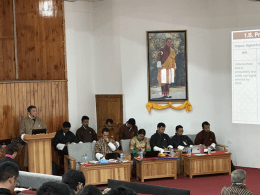
In a significant boost to bilateral ties, Bhutan and India are deepening their collaboration in space technology with a new satellite intelligence partnership. On June 15, 2026, Yang Khor Private Limited, a leading Bhutanese ICT firm, signed a Memorandum of Understanding with SatSure Analytics India Private Limited. This agreement marks a practical step in harnessing geospatial AI and Earth observation data for Bhutan’s sustainable development. Building on longstanding cooperation—including the successful launch of the INDIA-BHUTAN SAT in 2022 and the 2024 Joint Plan of Action on Space Cooperation—this initiative underscores a maturing relationship rooted in mutual trust and shared progress.
The partnership leverages India’s advanced space capabilities, spearheaded by entities like ISRO and private innovators such as SatSure, to address Bhutan’s unique challenges. SatSure specializes in turning satellite and aerial data into actionable decision intelligence for sectors like agriculture, forestry, hydropower, disaster resilience, and climate monitoring. For a mountainous nation like Bhutan, where glaciers, forests, and rivers are vital yet vulnerable to climate change, this means precise tools for resource management, infrastructure planning, and environmental protection. Yang Khor will handle local data collection, AI model training, stakeholder engagement, and ground operations, fostering in-country capacity building.
This is more than technical cooperation; it embodies the ethos of Bharat-Bhutan friendship. India has consistently supported Bhutan’s digital and space ambitions—from allocating additional bandwidth on the South Asia Satellite to training engineers and joint satellite development. The recent IN-SPACe-led delegation to Thimphu further accelerated private sector engagement, demonstrating how government-to-government frameworks pave the way for commercial innovation. In an era of geopolitical flux and climate urgency, such ties strengthen regional stability without compromising Bhutan’s sovereignty or Gross National Happiness philosophy.
Critics might view this as dependency, but the reality is empowerment. Bhutan gains cutting-edge tools tailored to its needs, while India expands its space diplomacy footprint in the neighborhood. This model counters narratives of great-power competition by prioritizing South-South collaboration for societal good.
As the Himalayan region faces rising temperatures and development pressures, satellite intelligence offers a clear path forward: data-driven governance that balances growth with conservation. Bhutan and India’s deepening space-tech ties exemplify how strategic partnerships can uplift smaller economies while reinforcing broader Indo-Pacific resilience. Leaders in both nations should build on this momentum—expanding training programs, joint research, and applications in critical areas like early warning systems. In the final analysis, space is not just the final frontier; for neighbors like Bhutan and India, it is a shared sky of opportunity.