


Bhutan’s agricultural exports recorded a strong start this year, with the country shipping more than 10,000 metric tonnes of produce between January and April, reflecting growing regional demand for Bhutanese farm products and the government’s continued push to diversify export markets.
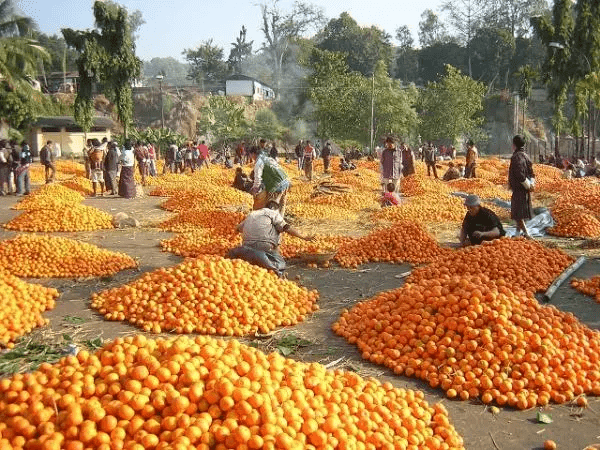
Data from the Department of Agricultural Marketing and Cooperatives (DAMC) showed that oranges remained Bhutan’s leading agricultural export commodity during the four-month period. More than 8,000 metric tonnes of oranges were exported, mainly to neighbouring India and Bangladesh, reaffirming the fruit’s position as one of the country’s most valuable agricultural products.
Areca nut emerged as the second-largest export item, with exports exceeding 1,400 metric tonnes. Ginger followed closely, crossing the 1,000 metric tonne mark. Cardamom exports also remained significant, surpassing 500 metric tonnes during the same period.
Bhutan also expanded the range of products entering international markets. In a first for the country, more than 10 metric tonnes of sweet buckwheat were exported to Japan through the Samdrup Jongkhar export gateway. The same gateway also facilitated the export of 80 kilograms of yam to India.
Exports of cordyceps — one of Bhutan’s high-value natural products — saw a sharp rise in April. More than 13 kilograms were exported during the month, a substantial increase from just over one kilogram recorded in March.
Officials say the country is now looking beyond its traditional trading partners to tap into new markets in Southeast Asia. DAMC Chief Marketing Officer Sangay Thinley said Bhutan is actively working to strengthen its international market presence, particularly in Thailand and Singapore.
He noted that Bhutan recently organised a Bhutan Mini Market in Thailand and is currently working toward establishing a permanent Bhutan Mini Corner there. Similar efforts are also being planned for Singapore as part of broader initiatives to increase the visibility of Bhutanese agricultural products abroad.
The agriculture sector remains a key contributor to Bhutan’s economy. Last year alone, exports of primary and processed agricultural goods generated nearly Nu 4 billion in revenue.
Bhutan currently operates five export gateways located in Gelephu, Phuentshogling, Samdrup Jongkhar, Nganglam, and Paro International Airport, helping facilitate the growing movement of agricultural goods to regional and international markets.


