


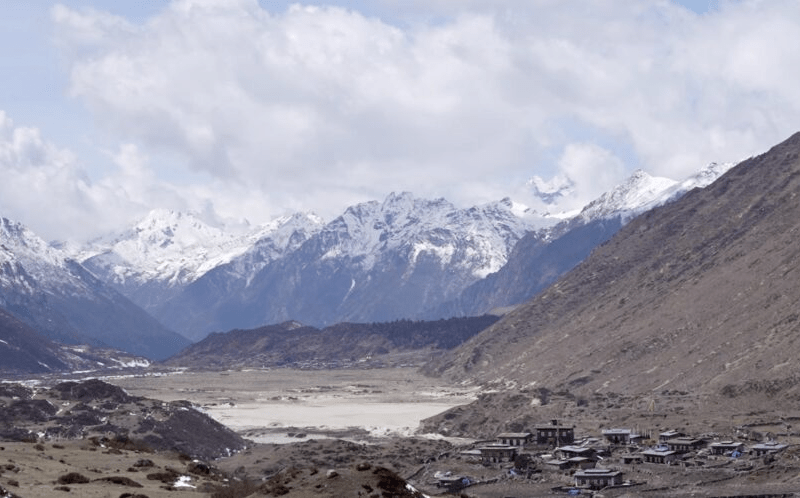
to safer ground due to the looming threat of glacial lake flooding, many families are still struggling to rebuild their lives.
The relocation was prompted by fears surrounding Thorthormi, one of the country’s most dangerous glacial lakes, where rising temperatures and melting snow continue to heighten the risk of a Glacial Lake Outburst Flood (GLOF). Although around 80 households were granted land across the river for resettlement, permanent homes remain out of reach for many.
Today, the community lives in a cycle of displacement. During summer, when melting glaciers increase the danger of flooding, families move into temporary shelters made of tarpaulin and wood in the relocation area at Dungbiteng. But once winter arrives, many return to their old homes for warmth and protection against the harsh mountain climate.
Residents say the biggest obstacle to rebuilding is the severe shortage of timber. Transporting construction materials to the isolated highland region is both physically demanding and financially draining.
“We were fortunate to receive land and temporary shelters,” said resident Dorji Wangmo. “But rebuilding homes similar to the ones we left behind is extremely difficult because timber is not easily available.”
For many households, the challenge goes beyond logistics. Families who spent years investing their earnings from cordyceps collection into traditional homes now face the painful reality of starting over from scratch.
“We used all the money we earned from cordyceps to build our houses,” said Namgay Dorji. “We brought roofing sheets all the way from Phuentshogling and decorated our homes with traditional designs. Now we have to rebuild everything again, but there is no timber.”
According to villagers, transporting timber alone can cost thousands of ngultrum. Horses, often the only means of carrying supplies through the rugged terrain, are expensive to hire. A single trip carrying just a few planks can take an entire day.
“During summer, we already spend heavily on transporting food and manure,” Namgay Dorji explained. “Now we also have to think about bringing timber for new houses. It is becoming impossible to manage.”
Many residents estimate that only a small portion of families are financially capable of constructing permanent homes. Others lack both resources and transport animals needed to move materials.
The emotional burden of relocation is equally heavy. For generations, families have lived in homes tied closely to their spiritual beliefs and cultural identity. Dismantling ancestral houses is seen by some not merely as a practical task, but as a deeply sensitive act.
“These homes are not just structures,” said Thangza-Toenchoe Tshogpa Nima Dorji. “Our deities have been worshipped here for generations. Some families fear dismantling the houses may bring misfortune or illness.”
Environmental concerns also weigh on residents’ minds. Villagers worry that rebuilding with timber could require cutting down large numbers of trees in an area already vulnerable to climate impacts.
“People everywhere are planting trees to prevent disasters,” Namgay Dorji said. “Yet here we may need to cut hundreds just to rebuild our lives.”
As a result, many residents are calling for alternative construction methods using concrete blocks or other modern materials that require less timber.
The Gasa District Administration has acknowledged the difficulties facing the community. Officials say the Thangza-Toenchoe resettlement project has been prioritised under Bhutan’s proposed climate finance initiative through the Loss and Damage Fund established during COP27.
The proposal, valued at approximately Nu 953 million, includes plans for climate-resilient housing and improved infrastructure in the relocation area.
“If the funding is approved, we will be able to provide modern housing materials that can help solve the timber shortage,” said Gasa Dzongda Jigme Namgyal.
The district has already completed an Early Childhood Care and Development (ECCD) centre in the resettlement area, which is expected to open soon.
Until larger support arrives, however, the people of Thangza-Toenchoe remain caught between the homes they are reluctant to abandon and a future they are still unable to fully build.


