


For decades, visitors came to Bhutan seeking monasteries, mountain trails, and spiritual retreats. Today, many travellers arriving in the capital are discovering something unexpected alongside the prayer flags and fortress monasteries of Thimphu — a vibrant and rapidly evolving café culture.
Tucked between traditional Bhutanese buildings and quiet city streets, a new generation of cafés, bakeries, live music spaces, and creative hubs is reshaping urban life in the Himalayan kingdom. These are not merely places to drink coffee. They have become meeting points for artists, entrepreneurs, students, musicians, remote workers, and young Bhutanese searching for identity in a rapidly modernising society.
On any afternoon in Thimphu, cafés hum with soft conversations, laptop screens glow beneath wooden interiors, and the aroma of espresso drifts through spaces filled with indie music and minimalist design. Young people gather over cappuccinos and pour-over coffee while discussing films, business ideas, photography, politics, and music. In many ways, the rise of café culture reflects the emergence of a more globally connected and creatively ambitious Bhutanese generation.
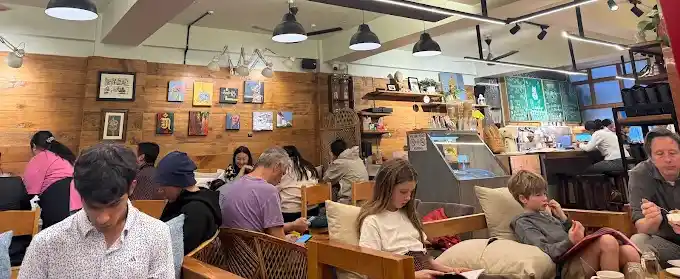
What makes Bhutan’s café scene especially unique is the way it blends international influences with local character. Unlike the polished uniformity of chain cafés found elsewhere, Thimphu’s independent coffee shops often feel deeply personal. Interiors incorporate traditional Bhutanese motifs, hand-painted murals, prayer wheels, woven textiles, and locally crafted furniture. Menus feature not only espresso and croissants, but also suja, or Bhutanese butter tea, locally sourced honey, ema datshi-inspired dishes, and Himalayan ingredients.
Many café owners are young entrepreneurs returning home after studying abroad or travelling internationally. They bring back ideas from cities like Bangkok, Melbourne, Delhi, Seoul, and New York, but adapt them to Bhutanese tastes and values. The result is a café culture that feels contemporary without losing its cultural grounding.
Coffee itself is becoming more sophisticated. Specialty brewing methods, artisanal roasting, and curated beans are increasingly common. Some cafés focus on slow coffee experiences, encouraging customers to linger rather than rush. Others double as bakeries producing sourdough bread, pastries, cheesecakes, and handcrafted desserts rarely seen in Bhutan a decade ago.
Yet perhaps the most significant transformation lies in the role these spaces now play within Bhutan’s growing creative economy.
Across Thimphu, cafés have evolved into informal cultural centres. Open mic nights, poetry readings, acoustic performances, film screenings, stand-up comedy events, and small art exhibitions regularly animate these intimate venues. Young musicians debut original songs before small but enthusiastic audiences. Filmmakers discuss scripts over coffee. Designers and content creators collaborate in corners filled with sketchbooks and laptops.
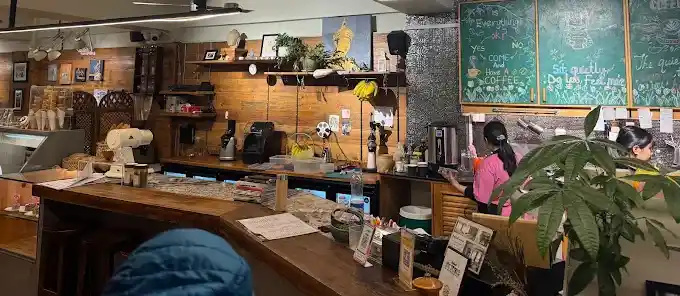
In a country where public creative spaces were once limited, cafés have become incubators for artistic expression and entrepreneurship.
The atmosphere is distinctly different from the traditional social structures that have long defined Bhutanese life. Here, conversations feel freer, more experimental, more outward-looking. Yet there remains a uniquely Bhutanese warmth and calmness to these spaces. Customers linger for hours without pressure. Staff often know regulars by name. Windows frame forests and mountains rather than concrete skylines.
Even tourism is beginning to shift alongside this cultural evolution. Younger travellers increasingly seek authentic urban experiences in addition to monasteries and trekking routes. They want to understand how Bhutanese youth live, create, and socialise. Thimphu’s cafés offer precisely that window into contemporary Bhutan.
This rise of café culture also mirrors broader changes taking place across Bhutanese society — increasing urbanisation, digital connectivity, youth entrepreneurship, and a growing creative industry supported by music, film, fashion, and content creation.
Still, unlike many rapidly modernising cities, Thimphu’s transformation remains remarkably gentle. Traffic remains light. Prayer flags still flutter above cafés. Monks occasionally sit beside students with laptops. Traditional architecture continues to shape the cityscape.
In Bhutan, modern café culture has not replaced tradition. Instead, it has found a way to sit beside it.
And perhaps that balance — between heritage and reinvention — is what makes Thimphu’s café scene unlike anywhere else in the world.


